

Can Ductless Mini Splits Lower Cooling Costs in Madera Homes?
Madera summers can put serious pressure on a home’s cooling system. With normal July and August high temperatures reaching the upper 90s, keeping indoor spaces comfortable can mean running air conditioning for long stretches. For homeowners looking for a more targeted approach, ductless mini split systems for Madera homes can offer an efficient alternative to cooling the entire house at once.
The key advantage is not simply that mini splits use less energy. Their ability to cool individual rooms or zones means you can direct cooling where it is needed instead of conditioning unoccupied spaces.
How Ductless Mini Splits Can Reduce Cooling Costs
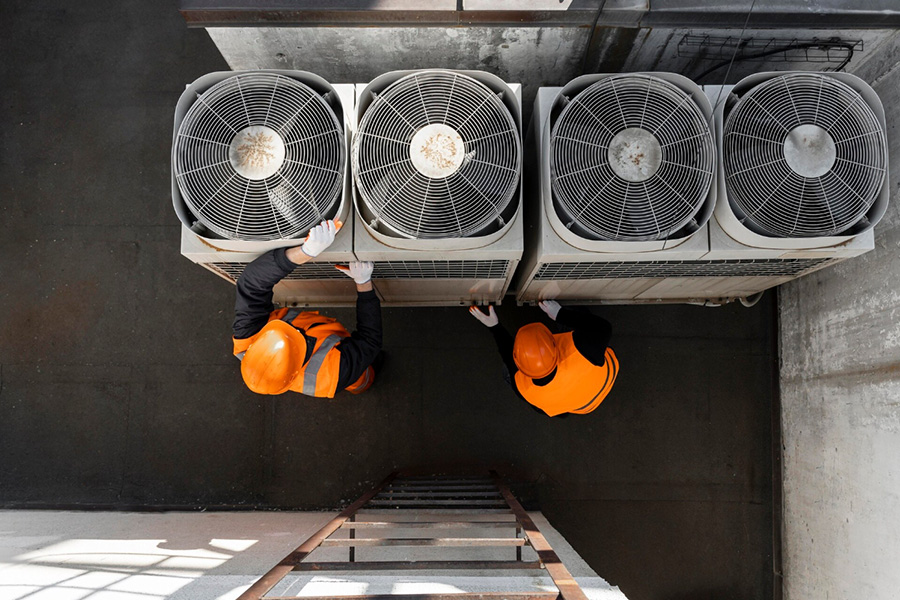
A ductless mini split uses an outdoor compressor connected to one or more indoor air-handling units. Unlike a traditional central air conditioner, it does not require a network of supply and return ducts throughout the home.
That design can help reduce energy waste in several ways. First, you can set different temperatures in different areas. Second, you can avoid cooling rooms that are rarely used. And third, there is no ductwork through which conditioned air can be lost because of leaks or inadequate insulation.
For example, imagine a Madera home where the bedrooms are occupied primarily at night while a home office is used during the day. A zoned mini split setup allows the homeowner to prioritize those spaces according to the household’s schedule rather than maintaining the same temperature throughout the entire house.
This approach can be particularly useful for older homes, additions, garages, or rooms that consistently feel warmer than the rest of the house.
Why Zoning Matters in a Madera Home
Madera’s hot summer weather makes cooling demand a significant consideration. When outdoor temperatures climb toward the upper 90s, it is tempting to keep the central air conditioner running continuously to maintain a comfortable indoor temperature.
But whole-house cooling is not always necessary.
Ductless systems provide room-by-room temperature control. Purl’s Sheet Metal & Air Conditioning notes that each indoor unit can serve an individual zone, allowing homeowners to control specific areas independently.
This can make sense when:
- Certain bedrooms are used only at night
- A home office needs cooling during working hours
- An addition is difficult to connect to existing ductwork
- One part of the house consistently runs warmer
- You want supplemental cooling without replacing the entire HVAC system
- Your home has limited or aging ductwork
The result is a more flexible cooling strategy. Instead of asking the HVAC system to treat every room equally, you can match cooling to how your household actually uses the home.
Ductless Mini Splits vs. Central Air Conditioning
A ductless mini split is not automatically the best choice for every property. Central HVAC remains a practical option for homeowners who want consistent whole-home heating and cooling through an existing duct network.
However, mini splits can be advantageous when extending or repairing ductwork would be difficult. ENERGY STAR specifically identifies homes without existing ducts, additions, and spaces that are difficult to condition as situations where ductless heat pumps can be useful.
Efficiency also depends heavily on the equipment selected and how it is installed. ENERGY STAR recommends properly sizing equipment for the home’s heating and cooling requirements, rather than simply choosing a larger system.
That distinction matters. An oversized or undersized system may not deliver the comfort or efficiency a homeowner expects.
What to Consider Before Installing a Mini Split
Lower energy use is attractive, but operating costs are only one part of the decision. The installation itself, the number of zones required, electrical requirements, equipment efficiency, and long-term maintenance all deserve consideration.
Start by looking at how your home is currently cooled. If some rooms are consistently uncomfortable while others are rarely occupied, zoning could provide a meaningful advantage. If the existing central system is old or inefficient, however, it may be worth comparing a ductless installation with replacing the entire HVAC system.
A professional evaluation should consider:
- The home’s size and layout
- Existing ductwork and its condition
- Insulation and air leakage
- Window exposure and solar heat gain
- The number of rooms requiring independent control
- Equipment efficiency ratings
- Appropriate system capacity
- Installation and maintenance requirements
ENERGY STAR emphasizes proper sizing because equipment that is too large or too small can struggle to provide effective comfort.
Don’t Overlook Installation and Maintenance
Even an efficient mini split can perform poorly if it is incorrectly sized or installed. Refrigerant lines, electrical connections, indoor-unit placement, airflow, and outdoor-unit location all influence system performance.
Placement is particularly important in a zoned system. Indoor units should be positioned to distribute conditioned air effectively rather than simply choosing the most convenient wall.
Routine maintenance matters as well. Keeping filters and indoor components clean and having the system professionally inspected when appropriate can help maintain airflow and efficiency over time.
A well-maintained system is also less likely to develop avoidable performance problems during periods of heavy summer use.
So, Can Mini Splits Actually Lower Cooling Costs?
They can, particularly when their zoning capabilities match the way a home is occupied. The biggest potential savings come from avoiding unnecessary cooling rather than assuming that every ductless system will automatically cost less to operate.
For a Madera homeowner, the strongest case may be a home with unused rooms, inconsistent temperatures, an addition without ductwork, or a desire for independent room control. In these situations, a mini split can provide cooling exactly where it is needed.
However, the right choice depends on the property. Comparing equipment efficiency, installation costs, existing HVAC performance, and expected usage patterns gives you a much clearer picture than looking at the equipment alone.
Conclusion
Ductless mini splits can lower cooling costs in Madera homes when they are properly selected, sized, installed, and used strategically. Their biggest advantage is flexibility: homeowners can cool occupied spaces without necessarily conditioning the entire house.
Madera’s hot summers make efficient cooling especially important, but there is no universal HVAC solution. If your home has rooms that are difficult to cool, limited ductwork, or different temperature needs throughout the day, a properly designed ductless system may be worth considering alongside other cooling options.