

Why Is Engineered Wood the More Sustainable Option?
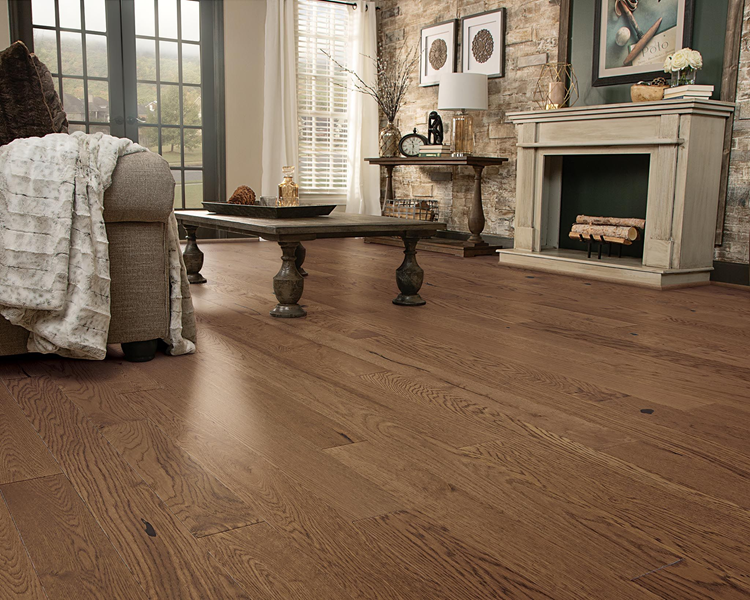
To put it simply, engineered wood provides the appearance and feel of genuine hardwood flooring while being more environmentally friendly. It is a sustainable flooring option for contemporary homes since it blends natural beauty with intelligent design.
Therefore, engineered wood adds warmth, strength, and style without sacrificing your environmental principles, whether you are remodeling a family kitchen, upgrading your living room, or remodeling your bedroom.
Why is engineered wood a sustainable choice?
Engineered wood initially appears to be identical to solid wood. Ash, walnut, or oak’s natural grain and texture are visible. Engineered flooring uses a thin coating of actual hardwood, known as a veneer, on top of a sturdy core composed of layers of plywood or high-density fiberboard (HDF) rather than being constructed wholly from a single solid piece of wood.
The tale of sustainability starts with that tiered construction. Each tree may grow farther since it only uses a thin covering of slow-growing hardwoods. Since fast-growing or recycled wood fibers are frequently used to make the inner layers, fewer trees are required overall, and less waste is created throughout the manufacturing process.
Constructed to last, season after season
The longevity of an item in your home is more important for true sustainability than its manufacturing process. Engineered wood flooring (พื้นไม้เอ็นจิเนียร์, this is the term in the Thai) is made to easily withstand the highs and lows of everyday life.
Engineered wood is inherently more sturdy than solid wood because of its layered composition. This implies that variations in humidity or temperature will not cause it to expand or contract as much. Therefore, engineered wood will not warp or split even if your house is a little warmer in the summer or if underfloor heating is ticking away in the winter.
It is also perfect for busy households. Engineered wood is resilient to daily wear and traffic, whether you have children, dogs, or just a busy social life. After many years, if the surface does appear a little worn out, you can revitalize it by sanding and refinishing it. Because of this, it can last far longer than a decade or two, which is far better for the environment than having to replace less expensive, less lasting flooring every few years.
The luxurious eco-friendly option
It is a common misconception that sustainability entails sacrificing style, yet this is not the case at all. Engineered wood is a fantastic option for contemporary living since it offers all the elegance and character of solid wood, along with further advantages.
Low-VOC (volatile organic compound) adhesives and coatings are used by many manufacturers to enhance indoor air quality and lower hazardous emissions. Engineered wood can have a substantially lower overall carbon footprint than solid flooring when combined with effective manufacturing techniques.
Designed not for showrooms, but for real homes
Aside from sustainability, engineered wood just makes life easier. It can be used in nearly every room of the house, even ones where solid wood might not work well. Its additional solidity can be advantageous in bathrooms, kitchens, and corridors.
Engineered flooring offers that uncommon blend of elegance and logic in a world where we are all becoming more conscious of what we purchase and how it is created. Knowing that it is long-lasting and environmentally conscious, you can dance on it in the evening or stroll barefoot across it in the morning.